Candidate biomarkers for sustained DMT effects
In a self-funded study using the psychedelic 5HT2A agonist DMT, potential biomarkers for sustained pharmacodynamic effects were investigated in healthy participants.
‘It has been demonstrated that psychedelic 5HT2A agonists have sustained therapeutic effects in conditions such as depression and substance abuse following a single administration. The mechanism of such sustained effects, persisting after the substance has left the body, remains to be elucidated,” says Dr Gabriel Jacobs, Director of Psychiatry. 'The scientific literature supports several mechanistic explanations, including enhanced neuroplasticity or even anti-inflammatory effects that occur downstream following activation of the 5HT2A receptor. However, these explanations remain speculative as convincing data in humans is currently lacking. And that is what we want to want to investigate.’
In a joint study by CHDR and Leiden University Medical Centre (LUMC), a number of potential mechanistic biomarkers are being investigated following the administration of DMT (N,N-dimethyltryptamine. Jacobs: ‘We hope this will provide more insight into the sustained effects of psychedelic compounds.’ The measurements range from resting state functional MRI to EEG evoked potentials, inflammatory response and voice recordings.
Wide range
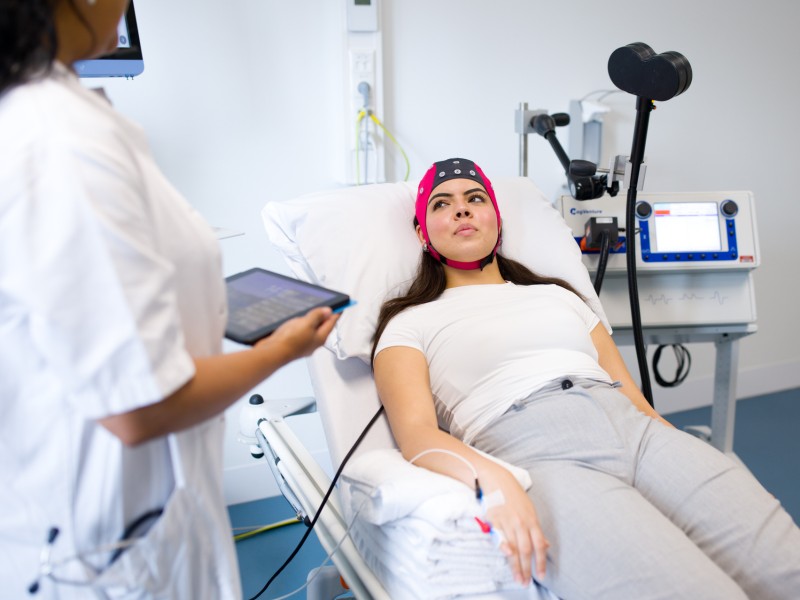
The placebo-controlled, three-way crossover study assessed the sensitivity of several candidate biomarkers at the biochemical, neural-network and behavioural levels of CNS functioning in healthy participants. In collaboration with CHDR’s R&D laboratory, ex-vivo LPS stimulation of PBMC’s was applied to explore DMT’s potential anti-inflammatory effects. In addition, functional network connectivity was measured with fMRI in various resting-state networks (including the default mode, salience, and frontoparietal networks). Measurements were performed during the psychedelic experience, and in addition 4 and 24 hours after administration, when the acute effects have passed, in an attempt to identify sustained effects beyond DMT’s clearance.
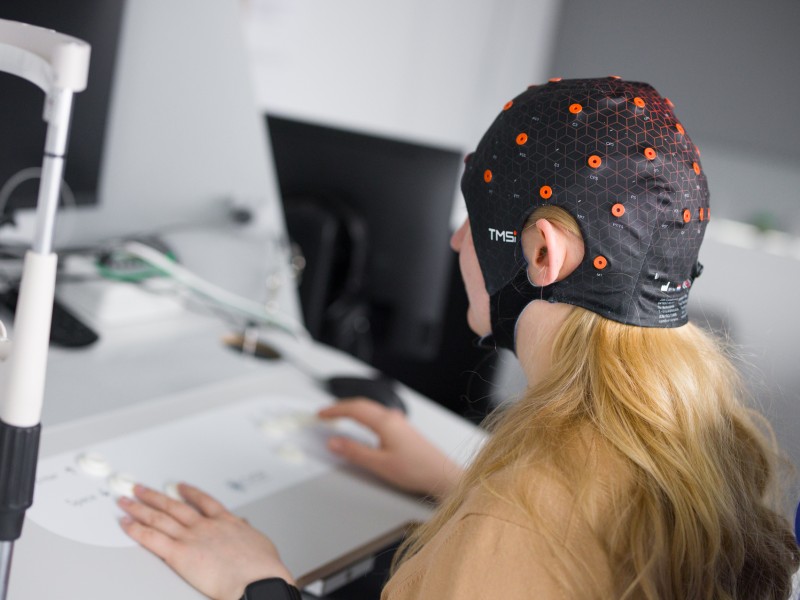
To map possible effects on neuroplasticity, the researchers used event-related potentials (ERP) related to learning, such as the Roving Mismatch Negativity (rMMN) and visual evoked potentials long-term potentiation tasks (VEPLTP). (More about these measurements in the article on EEG-related developments).
An interesting biomarker that was also included in the study is based on the participants' voices. At several points in time after the administration of DMT, they were asked to read a number of words aloud, and a conversation with them was recorded. These voice fragments will be analysed for voice characteristics and the conversation will also be analysed for content.
Finally, the facial emotion recognition task (FERT), which may be included in Psycart, the test battery CHDR is developing to study emotions, behaviour and mood, to complement CHDR’s neurophysiological NeuroCart®. In the FERT, the participant is shown standardised photos of faces and is asked to name the emotion of the person depicted. In other studies with psychedelics, the FERT has shown a decreased response to faces showing fear and anger and an enhanced sensitivity to happy expressions while subjects are under the influence of the psychedelic compound. This study explores the FERT responses in the hours after the psychedelic effects of DMT have worn off. The Biomarker Engineering and Analytics contributed to the development and evaluation of the neuroplasticity, voice and FERT measurements,
‘So we are examining a broad range of biomarkers that have been shown to be sensitive to the acute effects of DMT and/or that may plausibly be linked to the putative mechanisms underlying DMT’s sustained effects beyond its clearance,’ says Jacobs. ‘We are very curious whether any of these biomarkers could demonstrate effects up to 24 hours after administration. This study will also allow us to further validate our biomarker platform to study the effects of other psychedelic compounds. By doing so, CHDR will contribute to the early clinical development of rapid-acting antidepressants.’
Interested in learning more?
More articles from Developing methods